Selected work
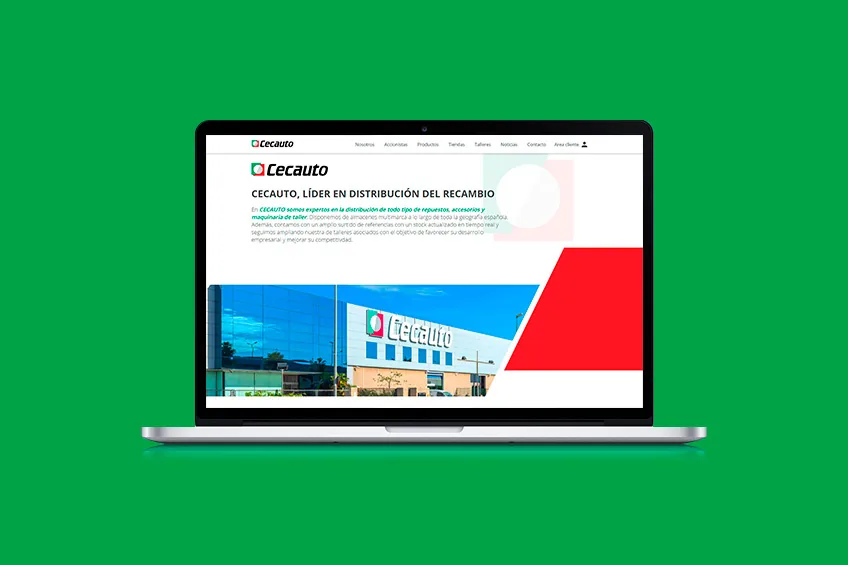
Automotive parts distributor: stock platform.
A connected platform for automotive parts, technical characteristics and real-time stock across warehouses.
01 / The decision
Make the commercial
logic visible.
A connected platform for automotive parts, technical characteristics and real-time stock across warehouses.
The project shows how operational database integration can make a complex parts catalogue practical for an automotive distribution team. The useful question is not whether a platform can display a feature. It is whether the feature helps the buyer, the commercial team and the operating system reach the same reliable outcome.
02 / What the work covers
A system, not
a collection of screens.
Map customer roles, account rules, pricing, approval and the action that defines a useful conversion for this route.
Define the attributes, documents, compatibility and category logic a buyer needs before speaking to sales or placing an order.
Clarify where product, price, stock, order and customer data are owned, how they move and what happens when an exception occurs.
Use behaviour, search, service and sales evidence to decide what should be improved after the first release.
03 / Where it fits
Designed for a
real buying journey.
A high-ticket B2B platform succeeds when it supports more than checkout. It should help a buyer compare options, a repeat customer act quickly, a dealer serve their own customers and a sales team intervene with context. That requires content, interface and integration choices to reinforce the same commercial model.
For Automotive parts distributor: stock platform, we start with the information and decisions that cannot be guessed. The result is a clearer brief, a more reliable build and an experience that can keep improving as the business changes.
04 / Route-specific brief
What this Automotive parts distributor: stock platform case demonstrates
This case is relevant because it connects a visible digital experience to the product and operational structure behind it. A connected platform for automotive parts, technical characteristics and real-time stock across warehouses.
The useful lesson is not to copy a screen. It is to understand which information architecture, system connection and commercial hand-off made the experience appropriate for this organisation, its customers and its internal team.
Read The project shows how operational database integration can make a complex parts catalogue practical for an automotive distribution team. as the problem context that shaped priorities, rather than as a generic ecommerce feature request.
The catalogue, portal or transaction pattern in Automotive parts distributor: stock platform follows from its users, information model and operational dependencies.
Use the case to ask which equivalent product truth, service route or integration would need to work in another business.
05 / Practical questions
What should be defined before development begins?
The buyer roles, product and price sources, commercial rules, integrations, success criteria and the first release boundary. A feature list without these decisions creates cost and ambiguity later.
Can this work start with an existing WooCommerce or WordPress site?
Yes. The first step is to understand what is valuable, what creates risk and whether the existing data and architecture can support the required change. Rebuild is not assumed.
How do you measure success?
By the commercial and operational action this route is meant to improve: qualified enquiries, order completion, successful search, reduced service effort, faster updates or improved data reliability. Traffic alone is not the objective.
06 / Questions about Automotive parts distributor: stock platform
When should Automotive parts distributor: stock platform be prioritised?
A connected platform for automotive parts, technical characteristics and real-time stock across warehouses. The project shows how operational database integration can make a complex parts catalogue practical for an automotive distribution team.
What should be defined first for Automotive parts distributor: stock platform?
Agree the context, design decision and operating outcome the work needed to achieve. Without those decisions, scope becomes a feature list that is difficult to prioritise, estimate and maintain.
Which teams should be involved?
Business, sales or channel, product, technology and the people responsible for data and operations. Each team brings a constraint that must be visible before the build starts.
How is success validated?
Set an observable commercial or operational action: finding the right product, completing an order, reducing a manual query, updating information or accelerating an approval. Traffic without context is not enough.